
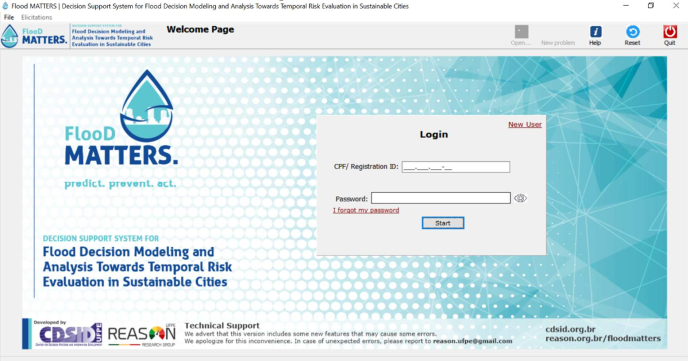
INPI registration: BR512023001941-0
Authors: Adiel Teixeira de Almeida; Marcelo Hazin Alencar; Lucas Borges Leal da Silva
Summary: Urban adaptation implies combating the multifaceted effects of the climate and requires public managers to propose a broad agenda between public and private technical-scientific institutions, in order to take preventive, efficient, and innovative decisions concerning floods. Given this back-drop, presents a novel Decision Support System (DSS) for enhancing flood risk prioritization in urban areas under the multicriteria approach. Therefore, this DSS explores multidimensional models to support the decision-making process, thereby inserting the decision-maker's (DM’s) preferences, in terms of expected utility (EU), by using the Multi-Attribute Utility Theory (MAUT), Decision Analysis and other important methodological advances in this field. Comprising environmental, financial, human, mobility, and social issues simultaneously, the models deal with risk assessment bycombining the sources of hazard and its consequences with EUs under a stationary perspective, in short- and long- term decisions.
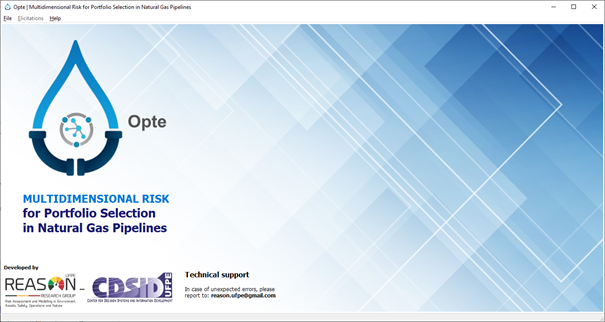
INPI registration: BR512023001858-9
Authors: Adiel Teixeira de Almeida; Marcelo Hazin Alencar; Ramon Swell Gomes Rodrigues Casado; Cristina Pereira Medeiros
Summary: This Decision Support System (DSS) contributes to the decision-making process regarding risk management for natural gas pipelines, making it more explicit, rational, and structured. In other words, it is appropriate to consider an evaluation involving multiple dimensions of consequence to which pipelines are subjected. To this end, this DSS explores a multidimensional risk assessment (based on Utility Theory and Decision Theory) capable of aggregating the probabilities, consequence values, and preferences of the gas carrier manager in the face of this multiple-dimension scenario. In addition, it efficiently directs the focus of risk mitigation. A portfolio approach is used to support the strategic selection of the most critical sections of the pipeline. In this regard, the system introduces an implicit enumeration algorithm to handle portfolio selection when the interval scale is the sole form of measurement.
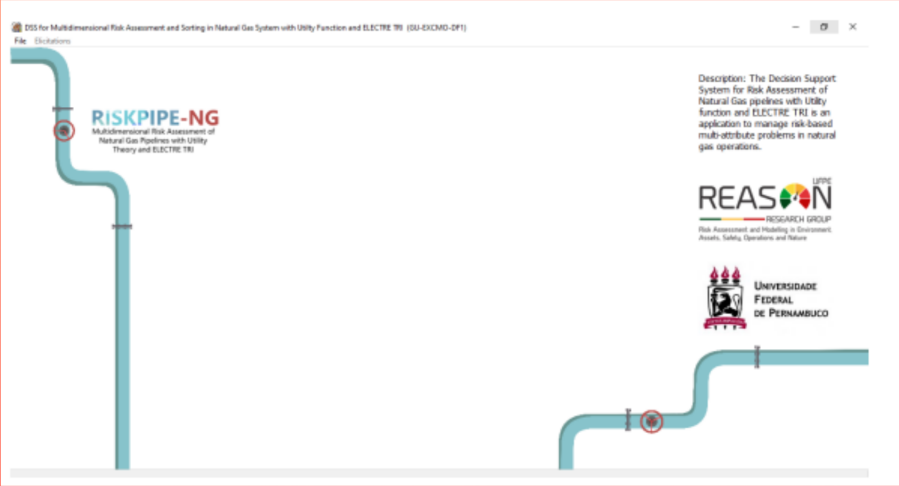
INPI registration: BR 512021000748-4
Authors: Adiel Teixeira de Almeida; Marcelo Hazin Alencar; Rodrigo José Pires Ferreira; Francisco Filipe Cunha Lima Viana
Summary: The Decision Support System for Natural Gas Pipeline Risk Assessment, incorporating Utility Function and ELECTRE TRI, is an application designed to address multi-attribute challenges in the context of natural gas pipeline operations. The system computes multidimensional risks for different pipeline areas and classifies them based on risk levels, providing valuable insights for effective risk planning and control processes.
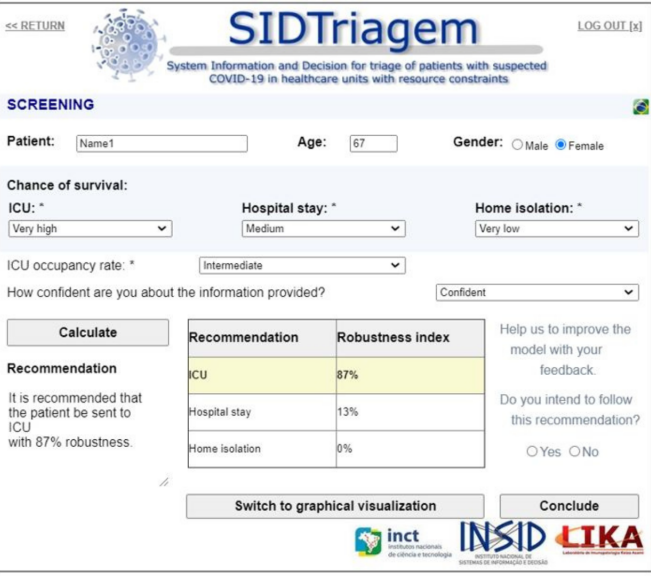
INPI registration: BR 512020002172-7
Authors: Adiel Teixeira de Almeida; Eduarda Asfora Frej; Rodrigo José Pires Ferreira; Alexandre Ramalho Alberti; Lucia Reis Peixoto Roselli; Moacir Fernando Morais Galdino de Lima; Murilo Carlos Amorim de Britto; Evônio de Barros Campelo Júnior
Summary: SIDTriagem is a decision information system for screening patients with suspected and/or diagnosed COVID-19 in units with resource restrictions. The product's contribution is that it offers a web-based application to support healthcare professionals' decisions in the context of the COVID-19 pandemic, in a resource-constrained context. Three important decisions are dealt with in SIDTriagem: screening patients; allocating patients to ICU (Intensive Care Unit) beds; and deciding on patient testing. Decision support for these three approaches is based on the utilitarian principle, aiming to maximize the number of lives saved. Factors such as the patient's clinical condition, laboratory test results and the patient's chances of survival in different scenarios are taken into account to provide a recommendation to healthcare professionals on the best course of action. The recommendation is given based on a robustness index for each decision alternative, which is calculated using a Monte-Carlo simulation process.
INPI registration: BR 512020002173-5
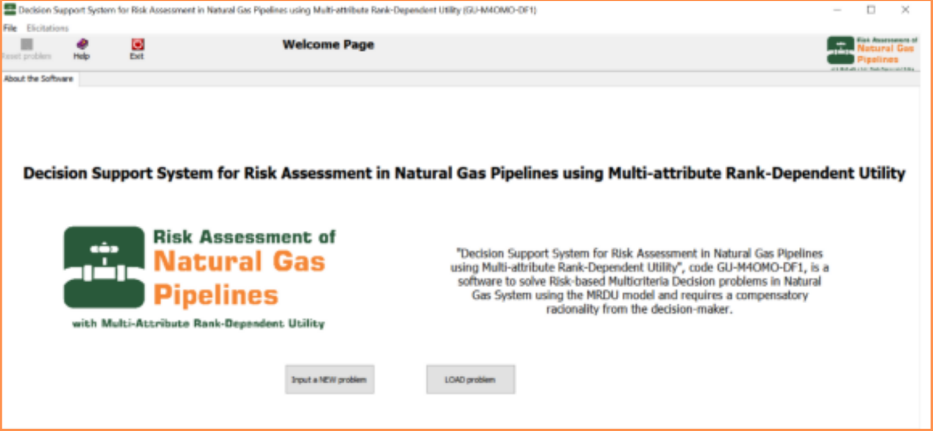
Authors: Adiel Teixeira de Almeida; Cristina Pereira Medeiros; Marcelo Hazin Alencar; Lucas Borges Leal da Silva
Summary: The initiative involves implementing a multi-attribute risk assessment model for natural gas pipelines, integrating unexpected utility to enhance the precision of risk area recommendations for these pipelines. The environmental, human, and financial risks associated with the transportation and distribution of natural gas through pipelines offer the system a comprehensive understanding of potential damages resulting from operational failures, thus minimizing losses.
INPI registration: BR 512018001408-9
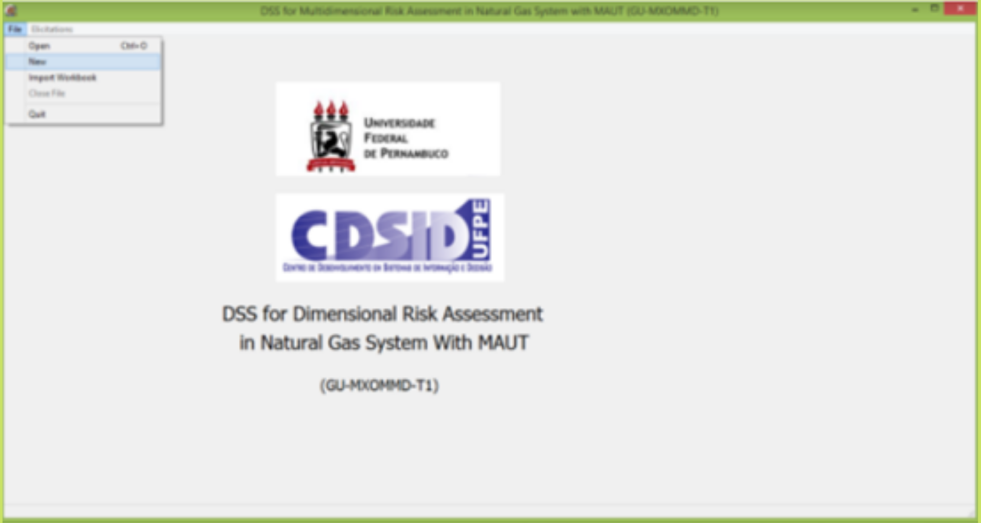
Authors: Adiel Teixeira de Almeida; Cristina Pereira Medeiros; Marcelo Hazin Alencar
Summary: The objective is to implement a multi-attribute risk assessment model for natural gas pipelines by integrating the multi-attribute utility theory (MAUT). This approach aims to enhance the credibility of risk area recommendations for the pipelines. The analysis of environmental, human, and financial risks in the realm of natural gas transport and distribution not only generates knowledge and expertise among decision-makers but also effectively reduces resistance, enhances knowledge within the business team, and streamlines the process of risk assessment and accident prevention in this intricate context.
Departamento de Engenharia de Produção
Avenida da Arquitetura, s/n, Cidade Universitária
Recife – Pernambuco – Brasil
CEP 50740-550
reason.lab@ufpe.br

REASON – UFPE
+55 81 3879.5553
